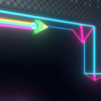
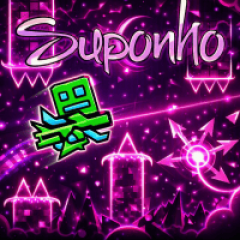
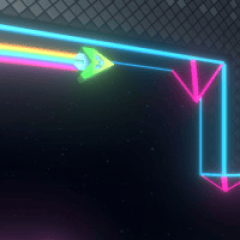
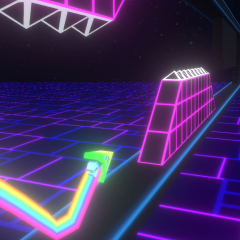
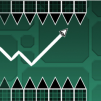
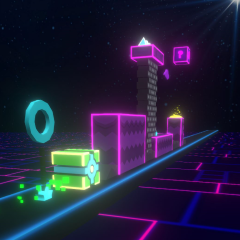
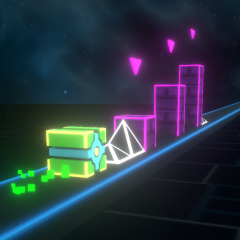
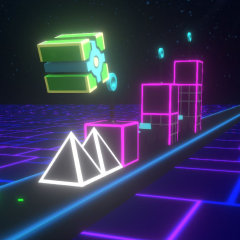
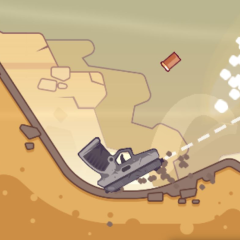
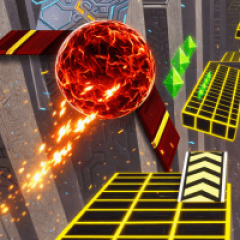
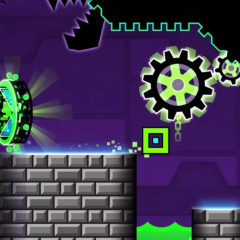
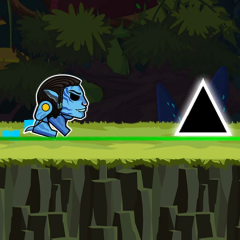
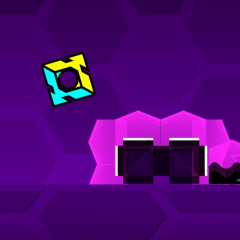
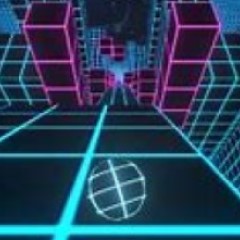
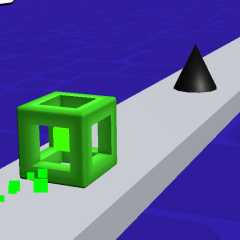
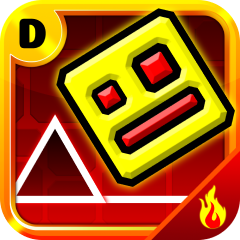
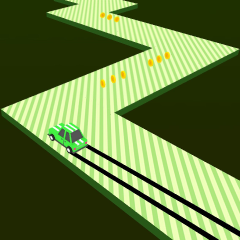
Geometry Dash Polargeist is a rhythm platformer with precise jumps and tricky obstacles. Test your timing and skills in this fast-paced level.
Mastering the Rhythm of Polargeist
Timing Matters More Than Speed
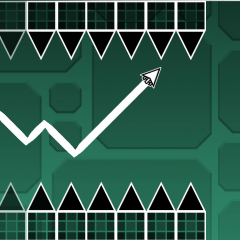
Polargeist is built around controlled movement rather than simply rushing forward. Obstacles often require you to recognize their position and tap at the right moment. A jump that is slightly too early or too late can send you directly into a hazard, so learning the rhythm of each section is essential.
Learn Each Section Through Repetition
Repeated attempts are one of the best ways to understand the level. Instead of focusing only on reaching the end, pay attention to where mistakes happen. Once a difficult sequence becomes familiar, your movements can become more consistent and less dependent on last-second reactions.

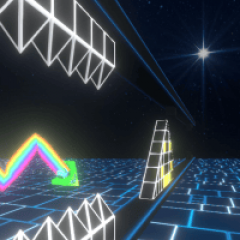
The dazzling and challenging Geometry Dash Polargeist
What Makes the Level Challenging?
Features That Test Your Reactions
- Fast platforming that demands accurate timing.
- Hazards positioned to punish careless movement.
- Rhythm-based sequences that encourage consistent tapping.
- Multiple sections that require different levels of precision.
- A challenging progression that becomes easier with practice.
Controls You Need to Master
- Mouse Click: Use the mouse to control jumps when playing on a computer.
- Spacebar: Press the spacebar to perform the main jump action.
- Tap: On compatible touch devices, tap the screen to control movement.
Build a Reliable Run
How to Play Polargeist
- Start by observing the opening obstacles before trying to move aggressively.
- Time every jump according to the space available between hazards.
- Use repeated attempts to memorize difficult sequences.
- Keep your inputs consistent instead of tapping randomly.
- Focus on reaching the next section rather than worrying about the entire level.
Turn Mistakes Into Progress
Every failed attempt can reveal something useful. If you repeatedly hit the same obstacle, study when you press the button and adjust the timing on your next run. Small improvements can eventually turn a difficult sequence into a predictable pattern.
Practical Tips for Better Attempts
Stay Ahead of the Obstacles
- Look slightly ahead of your character so you have time to prepare.
- Keep your taps deliberate and avoid unnecessary inputs.
- Memorize sections that repeatedly cause failures.
- Practice difficult sequences until your reactions become automatic.
- Stay calm after a mistake and use the next attempt to correct it.
Keep Your Rhythm Consistent
One of the simplest ways to improve is to develop a steady sense of timing. Listen to the music while playing and use the rhythm as a guide, but always prioritize the position of the obstacles. Consistent timing will make your movement more predictable and help reduce accidental jumps.