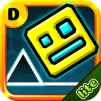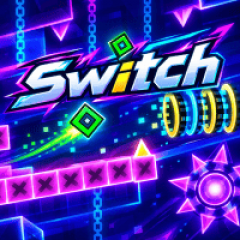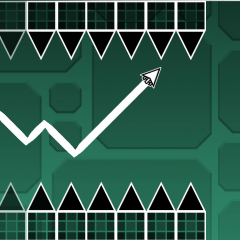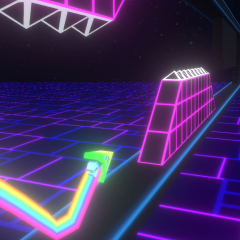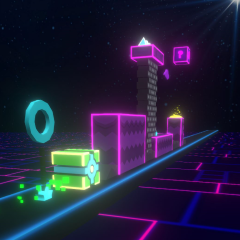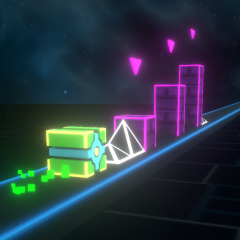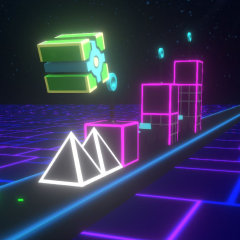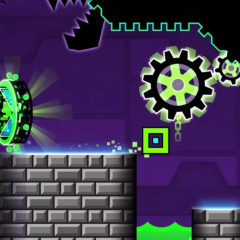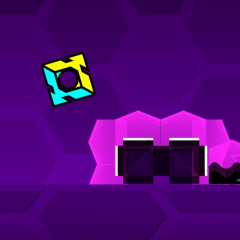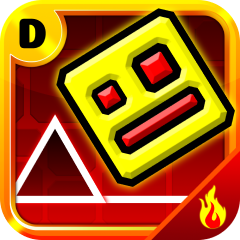
Geometry Dash Switch is a fast rhythm platformer that challenges reflexes on neon tracks. Jump into the Geometry Dash Switch game for neon thrills!
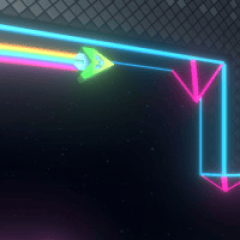
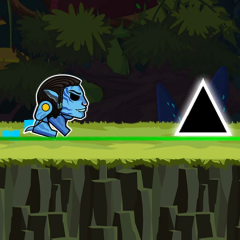
Geometry Dash Switch delivers a demanding rhythm platforming experience built around quick reactions and precise timing. The player guides a geometric character through a dangerous course filled with spikes, gaps, gravity changes, portals, and other obstacles. The character continues moving forward automatically, so success depends on making the right input at exactly the right moment.
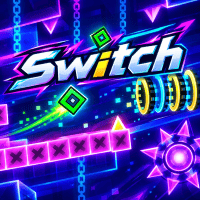
Overcome every challenge with Geometry Dash Switch
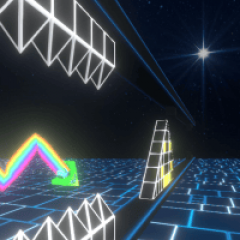
Gravity is a major part of the challenge in Geometry Dash Switch. Portals can change the direction in which the character moves, forcing players to adjust their timing as the route changes. A jump that feels safe on one section can become dangerous after a gravity transition. Watching the upcoming path and reacting early makes it easier to handle sudden changes without losing control.
Fast movement can make it tempting to react only when an obstacle is directly ahead. A better approach is to look slightly farther along the route. This gives you more time to recognize spikes, gaps, platforms, and gravity portals before your next action is required. Learning the visual patterns also helps turn difficult sequences into repeatable movements.
Practice mode is useful when a section repeatedly causes crashes. Checkpoints allow players to return to challenging areas instead of replaying the entire route after every mistake. Spend time learning the timing of each difficult sequence, then attempt the complete level once those movements feel consistent.
The basic controls are easy to understand, but completing challenging sections requires much greater precision. Every input affects the character at a specific point in the course, making timing more important than complicated button combinations. This creates a clear skill curve where repeated practice can improve consistency.
Geometry Dash Switch becomes easier when players stop treating each attempt as a reaction test and start recognizing the patterns ahead. Remembering when to jump, when to hold, and when to release can make previously difficult sequences feel predictable. Focus on one troublesome section at a time, then connect those improvements during a full run.